



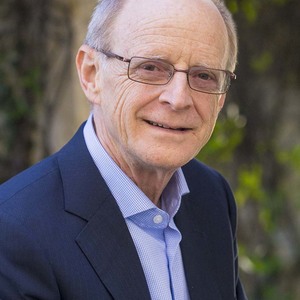

James W. Pennebaker
James W. Pennebaker is the Regents Centennial Professor of Liberal Arts and Professor of Psychology. He and his students are exploring natural language use, group dynamics, and personality in both laboratory and real world settings. His earlier work on expressive writing found that physical health and work performance can improve by simple writing and/or talking exercises. His cross-disciplinary research is related to linguistics, clinical and cognitive psychology, communications, medicine, and computer science. Author or editor of 12 books and over 300 articles, Pennebaker has received numerous research and teaching awards and honors.
Primary Interests:
- Close Relationships
- Communication, Language
- Emotion, Mood, Affect
- Gender Psychology
- Group Processes
- Health Psychology
- Internet and Virtual Psychology
- Interpersonal Processes
- Personality, Individual Differences
- Political Psychology
- Research Methods, Assessment
Online Studies:
Note from the Network: The holder of this profile has certified having all necessary rights, licenses, and authorization to post the files listed below. Visitors are welcome to copy or use any files for noncommercial or journalistic purposes provided they credit the profile holder and cite this page as the source.
Image Gallery



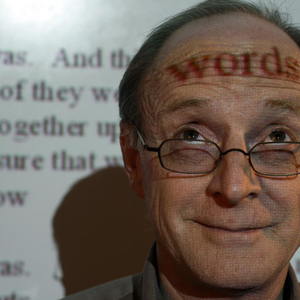
Video Gallery

The Secret Life of Pronouns (TEDx talk)
Select video to watch
-
17:59 The Secret Life of Pronouns (TEDx talk)
Length: 17:59
-
2:41 The Secret Life of Pronouns: What Our Words Say About Us
Length: 2:41
-
5:26 The Expressive Writing Method
Length: 5:26
-
52:00 Using Expressive Writing to Heal Emotional Wounds
Length: 52:00
-
3:38 How to Get Started With Expressive Writing
Length: 3:38
-
3:07 Language of Truth and Lies: Performatives
Length: 3:07
-
2:33 Language of Truth and Lies: I-words
Length: 2:33
-
3:16 Emotional Well-Being
Length: 3:16
-
4:34 What Words Say About Our Personality
Length: 4:34
-
4:33 What Do Words Choices Tell Us About Relationships?
Length: 4:33
-
2:44 Can We Detect Lying by Word Choices?
Length: 2:44
-
1:17:39 The Effects of Translating Emotional Experiences Into Words
Length: 1:17:39
-
4:08 Do Word Choices Reveal Who the Leader of a Group Is?
Length: 4:08
-
31:11 Emotions and Language in the Real World
Length: 31:11
-
16:39 The Arc of Narrative Presentation
Length: 16:39
-
1:15:41 What Now? Moving Past the Replication Debate
Length: 1:15:41
Books:
- Pennebaker, J. W. (2011). The secret life of pronouns: What our words say about us. New York: Bloomsbury Press.
- Pennebaker, J. W. (1997). Opening up: The healing power of expressing emotions. New York: Guilford Press.
- Pennebaker, J. W. (2004). Writing to heal: A guided journal for recovering from trauma and emotional upheaval. Oakland, CA: New Harbinger Press.
- Pennebaker, J. W., & Evans, J. (2014). Expressive writing: Words that heal. Enumclaw, WA: Idyll Arbor Books.
- Pennebaker, J. W., & Smyth, J. (2016). Opening up by writing it down: The healing power of expressive writing (3rd. ed.). New York: Guilford.
- Pennebaker, J. W., Paez, D., & Rimé, B. (Eds.). (1997). Collective memory of political events: Social psychological perspectives. Hillsdale, NJ: Erlbaum.
Journal Articles:
- Boyd, R.L., & Pennebaker, J.W. (2015). Did Shakespeare write Double Falsehood? Identifying an individual’s mental world with text analysis. Psychological Science, doi:10.1177/0956797614566658.
- Ireland, M. E., Slatcher, R. B., Eastwick, P. W., Scissors, L. E., Finkel, E. J., & Pennebaker, J. W. (2010). Language style matching predicts relationship initiation and stability. Psychological Science.
- Ireland, M.E., & Pennebaker, J.W. (2010). Language style matching in writing: Synchrony in essays, correspondence, and poetry. Journal of Personality and Social Psychology, 99, 549-571.
- Mehl, M. R., Vazire, S., Ramirez-Esparza, N., Slatcher, R. B., & Pennebaker, J. W. (2007). Are women really more talkative than men? Science, 317, 82.
- Pennebaker, J. W. (1997). Writing about emotional experiences as a therapeutic process. Psychological Science, 8, 162-166.
- Pennebaker, J. W., & King, L. A. (1999). Linguistic styles: Language use as an individual difference. Journal of Personality and Social Psychology, 77, 1296-1312.
- Pennebaker, J. W., Groom, C. J., Loew, D., & Dabbs, J. (2004). Testosterone as a social inhibitor: Two case studies of the effect of testosterone treatment on language. Journal of Abnormal Psychology, 113, 172-175.
- Pennebaker, J. W., Mehl, M. R., & Niederhoffer, K. (2003). Psychological aspects of natural language use: Our words, our selves. Annual Review of Psychology, 54, 547-577.
- Pennebaker, J. W., Paez, D., Deschamps, J. C., Rentfrow, J., Davis, M., Techio, E. M., Slawuta, P., Zlobina, A., & Zubieta, E. (2006). The social psychology of history: Defining the most important events of the last 10, 100, and 1000 years. Psicologia Politica, 32, 15-32.
- Slatcher, R. B., & Pennebaker, J. W. (2006). How do I love thee? Let me count the words: The social effects of expressive writing. Psychological Science, 17, 660-664.
- Tausczik, Y. R., & Pennebaker, J. W. (2010). The psychological meaning of words: LIWC and computerized text analysis methods. Journal of Language and Social Psychology, 29, 24-54.
Other Publications:
- Chung, C. K., & Pennebaker, J. W. (2007). The psychological functions of function words. In K. Fiedler (Ed.), Social communication (pp. 343-359). New York: Psychology Press.
- Pennebaker, J. W., & Chung, C. K. (in press). Expressive writing: Connections to physical and mental health. In H. S. Friedman (Ed.), Oxford handbook of health psychology. New York, NY: Oxford University Press.
- Pennebaker, J. W., Booth, R. J., & Francis, M. E. (2007). Linguistic Inquiry and Word Count (LIWC2007): A text analysis program. Austin, TX: LIWC.net.
- Pennebaker, J.W., Booth, R.J., Boyd, R.L., & Francis, M.E. (2015). Linguistic Inquiry and Word Count: LIWC 2015. Austin, TX: Pennebaker Conglomerates Inc (www.liwc.net)
Courses Taught:
- Eating Behavior and Disorders
- Health Psychology
- Introductory Psychology
- Language and Literature
- Language and Personality
- Language and Social Media
- Methodology
- Social and Political Institutions (1854-present)
- Social Physics
- Social Psychology
- Social Psychology of Language
- Social Psychology of Religion
- Stress and Psychosomatics
- Words and Social Processes
James W. Pennebaker
Department of Psychology
University of Texas
1 University Station A8000
Austin, Texas 78712
United States of America
- Phone: (512) 232-2781
